As land availability becomes increasingly constrained in ports, logistics hubs, precast yards, and industrial facilities, operators are under growing pressure to maximize productivity within limited space. Traditional gantry crane layouts, which often require wide travel lanes and large turning radii, are not always suitable for compact or irregular sites. In response, custom rubber tyred gantry cranes (RTGs) have emerged as a highly effective solution for narrow yards, restricted layouts, and space-limited operations.
Unlike standard RTG designs, customized RTGs are engineered to adapt to specific site constraints, operational workflows, and handling requirements. By optimizing structure, mobility, control systems, and safety features, manufacturers can deliver RTG solutions that maintain lifting performance while significantly reducing spatial demands.
This article explores how custom rubber tyre gantry cranes are designed for limited space, the key customization options available, and the benefits they bring to narrow-yard operations.
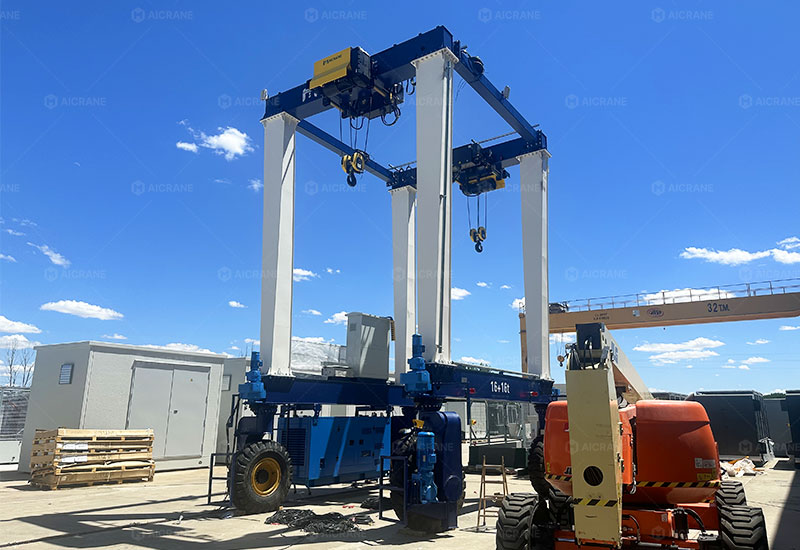
Understanding the Challenges of Limited Space and Narrow Yards
Space-limited yards present a unique set of challenges that directly impact crane selection and design. These challenges include:
-
Restricted aisle widths that limit crane travel and turning
-
Close proximity to buildings, stacks, or rail lines
-
Irregular yard layouts caused by existing infrastructure
-
Limited buffer zones for acceleration, deceleration, and braking
-
Higher collision risks due to tight clearances
In such environments, standard RTG cranes may be inefficient or even impractical. Oversized spans, conventional steering modes, or fixed structural dimensions can reduce stacking density and slow down material handling operations. This is where custom RTG solutions become essential.
Why Rubber Tyred Gantry Cranes Are Ideal for Narrow Yards
Rubber tyred gantry cranes already offer inherent advantages for space-constrained environments:
-
No fixed rails, allowing flexible travel paths
-
Multi-directional mobility through advanced steering systems
-
Adaptability to uneven or non-standard ground layouts
-
Lower infrastructure requirements compared to rail mounted cranes
When these advantages are combined with targeted customization, RTGs can be optimized specifically for compact yards and tight operational corridors.
Key Customization Areas for RTGs in Limited Space
1. Customized Span and Overall Dimensions
One of the most critical customization aspects is span optimization. In narrow yards, the RTG span must be carefully engineered to balance stacking capacity with clearance limitations.
Custom span solutions may include:
-
Reduced clear span to fit narrower container or material rows
-
Optimized leg spacing to improve maneuverability
-
Tailored overall width and height to avoid interference with nearby structures
By designing the RTG precisely around the available footprint, operators can maintain efficient stacking without sacrificing safety.
2. Advanced Steering Systems for Tight Maneuvering
Steering configuration plays a decisive role in how well an RTG performs in restricted spaces. Custom RTGs for narrow yards often feature enhanced steering modes, such as:
-
90-degree steering for lateral movement in tight aisles
-
Diagonal (crab) steering for precise alignment
-
Pivot or zero-radius turning for confined turning areas
-
Electronic steering synchronization for smoother transitions
These steering customizations allow RTG movable gantry cranes to move efficiently through narrow lanes while minimizing the risk of collision or misalignment.
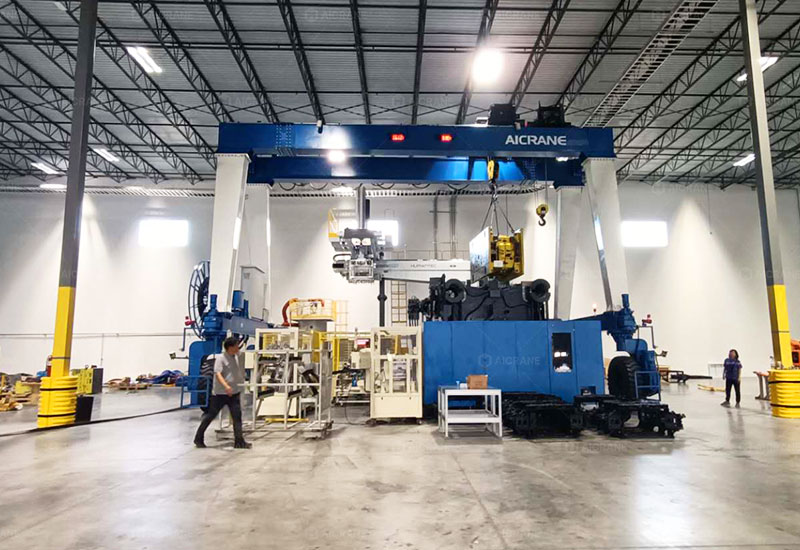
3. Compact Structural Design and Optimized Frame Geometry
In space-limited environments, the physical structure of the RTG must be carefully optimized. Custom structural solutions include:
-
Slimmer girder profiles with high-strength steel
-
Optimized leg geometry to reduce encroachment into travel lanes
-
Lower overall dead weight to reduce braking distance
-
Modular frame designs for easier installation in confined sites
Such structural customization ensures that the RTG remains robust while occupying minimal space.
4. Customized Lifting Height and Stacking Configuration
Limited yard space often requires vertical optimization to compensate for reduced horizontal area. Custom gantry cranes can be designed with:
-
Optimized lifting height for specific stacking requirements
-
Precise clearance control to avoid overhead obstructions
-
Customized spreader height and trolley travel limits
By tailoring vertical parameters, operators can increase storage density without expanding the yard footprint.
5. Tailored Control Systems for Precision Operation
In narrow yards, operator precision is critical. Custom RTGs typically incorporate advanced control and automation features, such as:
-
Variable frequency drives (VFDs) for smooth acceleration and deceleration
-
Anti-sway systems to reduce load oscillation in confined spaces
-
Fine-speed control modes for precise positioning
-
Programmable travel limits to prevent overrun in restricted zones
These control customizations significantly enhance operational safety and efficiency in tight environments.
6. Safety Customization for High-Density Yards
Safety risks are inherently higher in narrow yards due to reduced clearances and increased traffic density. Customized RTGs address these risks through:
-
Collision avoidance systems and laser scanners
-
Proximity sensors and audible/visual alarms
-
Customized safety interlocks for restricted zones
-
Emergency braking systems optimized for short stopping distances
Such safety-focused customization ensures compliance with international standards while protecting personnel, equipment, and cargo.
Application Scenarios for Custom RTGs in Narrow Spaces
Custom rubber tyred gantry cranes for limited space are widely used across various industries, including:
Container Yards and Inland Depots
Where land is scarce, customized RTGs enable higher stacking density and efficient container flow within compact terminal layouts.
Precast Concrete Yards
RTGs can be customized to handle long or heavy precast components in narrow production lanes without disrupting workflow.
Steel and Fabrication Yards
Custom spans and steering allow RTGs to navigate tight storage areas while handling coils, beams, and fabricated structures.
Logistics and Distribution Centers
RTGs customized for narrow yards support flexible material handling without the need for fixed rail infrastructure.
Economic Benefits of Custom RTGs for Space-Constrained Sites
While customization may involve higher upfront engineering costs, the long-term economic benefits are significant:
-
Improved land utilization, reducing the need for yard expansion
-
Higher throughput per square meter
-
Lower collision and damage-related costs
-
Reduced operational downtime
-
Enhanced adaptability for future layout changes
In many cases, a customized RTG solution delivers a lower total lifecycle cost compared to attempting to force a standard crane into a non-standard environment.
The Role of Manufacturers in RTG Customization
Successful RTG customization depends heavily on the manufacturer’s engineering capabilities and project experience. A professional RTG manufacturer typically provides:
-
Site analysis and layout optimization
-
Custom structural and mechanical design
-
Steering and control system integration
-
Installation guidance and commissioning support
-
Long-term service and upgrade options
This turnkey approach is particularly valuable for EPC projects and complex, space-limited installations.
Conclusion
As industrial yards and logistics facilities continue to face space constraints, custom rubber tyred gantry cranes for limited space and narrow yards are no longer a niche solution—they are a strategic necessity. Through tailored span design, advanced steering systems, compact structural optimization, and intelligent control features, customized RTGs enable operators to achieve high efficiency, safety, and flexibility even in the most restricted environments.
By partnering with an experienced RTG manufacturer and investing in customization, businesses can transform spatial limitations into competitive advantages—maximizing productivity without expanding their footprint.