Building a concrete batching plant requires more than purchasing equipment. You need to assess local demand, select the right plant type, plan the site, estimate investment costs, and prepare an operating strategy. Whether you want to supply concrete for your own construction projects or sell ready-mix concrete to other contractors, a structured plan can help you reduce risks and make better investment decisions.
1. Define Your Business Goals and Market Demand
Start by identifying who will buy or use your concrete. Potential customers include building contractors, road construction companies, infrastructure developers, and private property developers. Research local construction activity, competitor locations, prevailing concrete prices, and expected demand.
Estimate your expected sales volume and delivery radius before deciding on plant capacity. A compact concrete batching plant that is too small may struggle to meet peak demand, while an oversized facility can increase initial investment and operating costs without generating sufficient revenue.
2. Choose the Right Type of Concrete Batching Plant
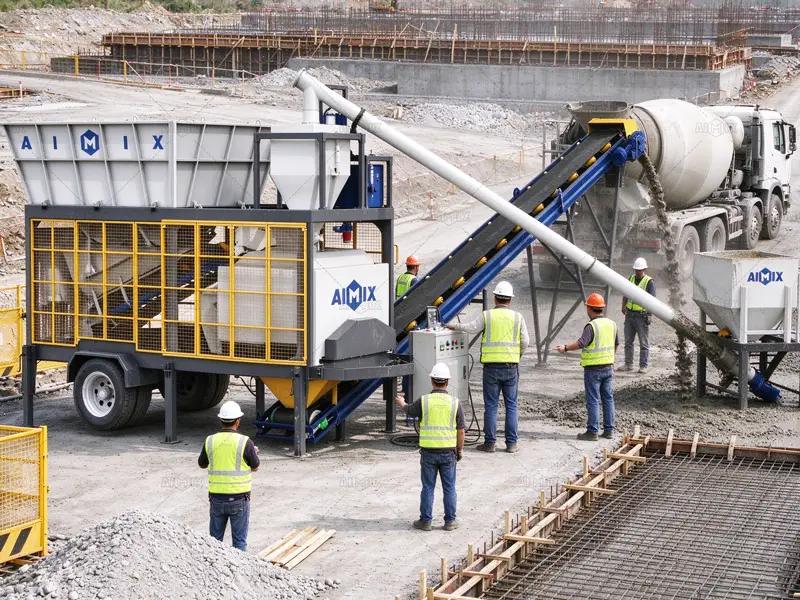
The best plant configuration depends on your project duration, production requirements, site conditions, and business model.
- Stationary concrete batching plant: Suitable for long-term production at a fixed location, including large construction projects and commercial concrete supply.
- Foundation-free concrete batching plant: Designed to reduce or avoid conventional foundation work, depending on the model and site requirements. It can be useful when installation time is limited.
- Mobile concrete batching plant: Suitable for contractors who need to relocate equipment between construction sites. Check transportation, setup, and relocation requirements before choosing a model.
- Ready-mix concrete batching plant: Intended for producing concrete for delivery to multiple customers or construction sites. Successful operation depends on market demand, delivery logistics, and production scheduling.
Compare rated output, mixer configuration, aggregate storage, automation, energy requirements, and maintenance access. Confirm the actual production capacity under your expected operating conditions with the supplier.
3. Plan the Site and Plant Layout
Choose a location with suitable road access, sufficient working space, and convenient access to aggregates, cement, water, and power. For commercial ready-mix operations, consider the distance to major customers and the time required to deliver fresh concrete.
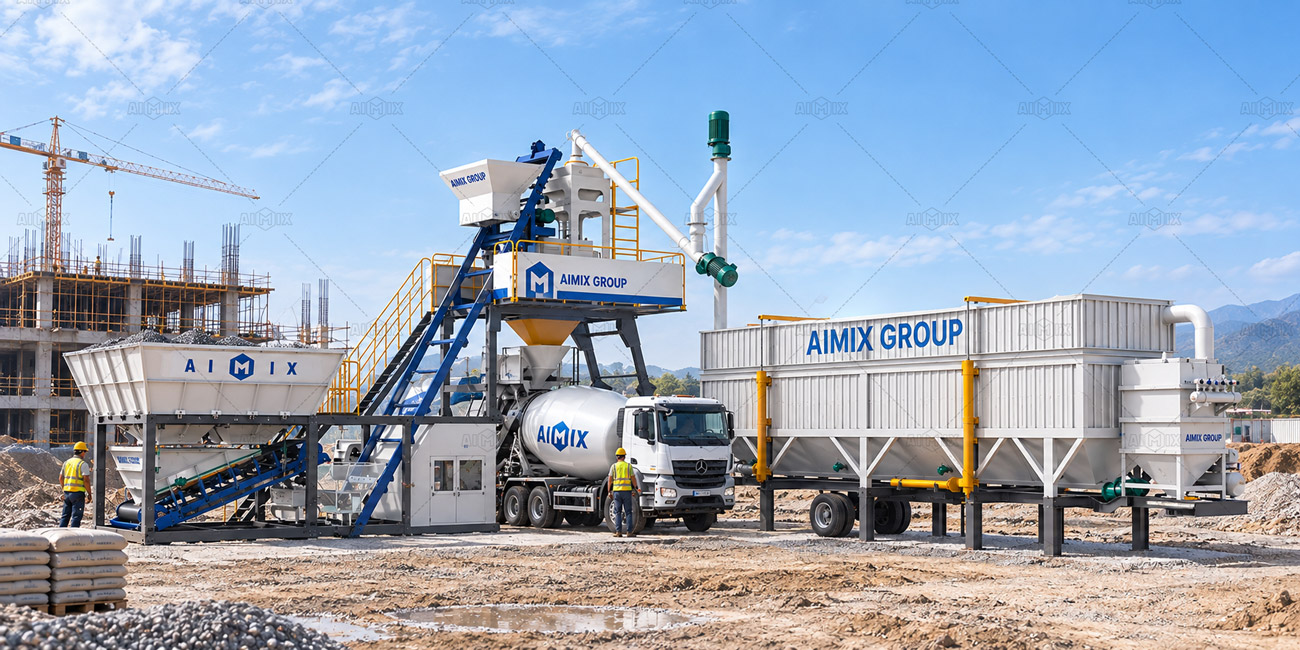
Prepare a layout covering aggregate storage, cement silos, batching and mixing equipment, truck circulation, drainage, and maintenance areas. Check land-use permissions, environmental requirements, dust control, noise limits, and wastewater management regulations before construction begins.
Foundation design and installation requirements should follow the selected equipment specifications and local engineering standards.
4. Calculate the Investment and Operating Costs
Prepare a budget that includes equipment purchase, land or rental costs, site preparation, foundations where required, transportation, installation, electrical work, and commissioning. Also estimate ongoing expenses such as cement and aggregate procurement, labor, fuel or electricity, maintenance, spare parts, and concrete delivery.
Build a financial forecast using realistic selling prices, expected utilization, payment terms, and seasonal demand. Calculate your break-even point based on contribution per cubic meter and fixed operating costs rather than relying on a universal production threshold.
5. Set Up Operations and Start the Business
Before production begins, arrange required permits, supplier agreements, staffing, quality control procedures, and customer contracts. Train operators to manage batching accuracy, mixer operation, equipment inspections, and routine maintenance.
Test the plant during commissioning and verify that the concrete meets the required mix design and applicable standards. For ready-mix concrete plant businesses, establish delivery schedules and coordinate batching with truck availability and customer requirements.
Develop a sales plan using direct contractor outreach, local partnerships, a professional website, and project referrals. Track production costs, equipment downtime, delivery performance, and customer feedback to improve profitability over time.
Starting a concrete batching plant business involves market research, equipment selection, site planning, financial analysis, and operational preparation. Define your production goals first, then select a plant type and capacity that match your expected demand. Before investing, confirm site requirements, local regulations, installation costs, and equipment specifications with qualified professionals and the plant supplier.