Desert construction projects in Saudi Arabia present a distinct set of operational challenges. High ambient temperatures, airborne sand, remote project locations, limited utility access, and long material transportation routes can all influence concrete production. For contractors involved in road construction, industrial facilities, residential developments, and large-scale infrastructure projects, establishing an on-site batching facility can help maintain a dependable concrete supply while reducing reliance on distant ready-mixed concrete suppliers.
However, investing in a concrete batching plant in Saudi Arabia involves more than selecting a production capacity or comparing equipment quotations. Contractors must assess the project’s duration, expected concrete demand, aggregate supply, water availability, power requirements, equipment mobility, and maintenance arrangements. These factors determine whether an on-site plant can support the construction schedule and deliver a reasonable return over its operating life. A suitable investment begins with the realities of the jobsite, not simply the rated output printed on a machine specification sheet.
Evaluate Concrete Demand and Desert Project Conditions
Estimate Total Concrete Volume and Daily Production Requirements
The first planning task is to establish how much concrete the project will consume and when that demand will occur. A highway project may require steady production over several months, while a remote industrial foundation may involve concentrated pouring periods followed by weeks of lower demand. Contractors should estimate total concrete volume, peak hourly consumption, average daily output, and the frequency of large pours. These figures help determine the required plant capacity and prevent investment in equipment that is either undersized for critical work or unnecessarily large for the actual workload. Rated production capacity should not be confused with sustained site output. Aggregate loading, batching cycles, material replenishment, maintenance, and concrete transportation all affect practical production. A realistic capacity assessment should include these operational variables.
Assess Remote Locations and Project Duration
Desert projects can be situated far from established urban supply networks. Long delivery distances may complicate scheduling, especially when concrete must arrive within a specified workability window. Establishing production closer to the placement area can reduce transport dependency and give contractors greater control over delivery timing. Project duration matters just as much. A plant intended for a multiyear infrastructure contract may justify a different configuration from one serving a short-term commercial development. Contractors should also consider whether the equipment can be relocated to another project after the original contract ends.
Choose the Right Batching Plant Configuration
When a Stationary Concrete Plant Is Suitable
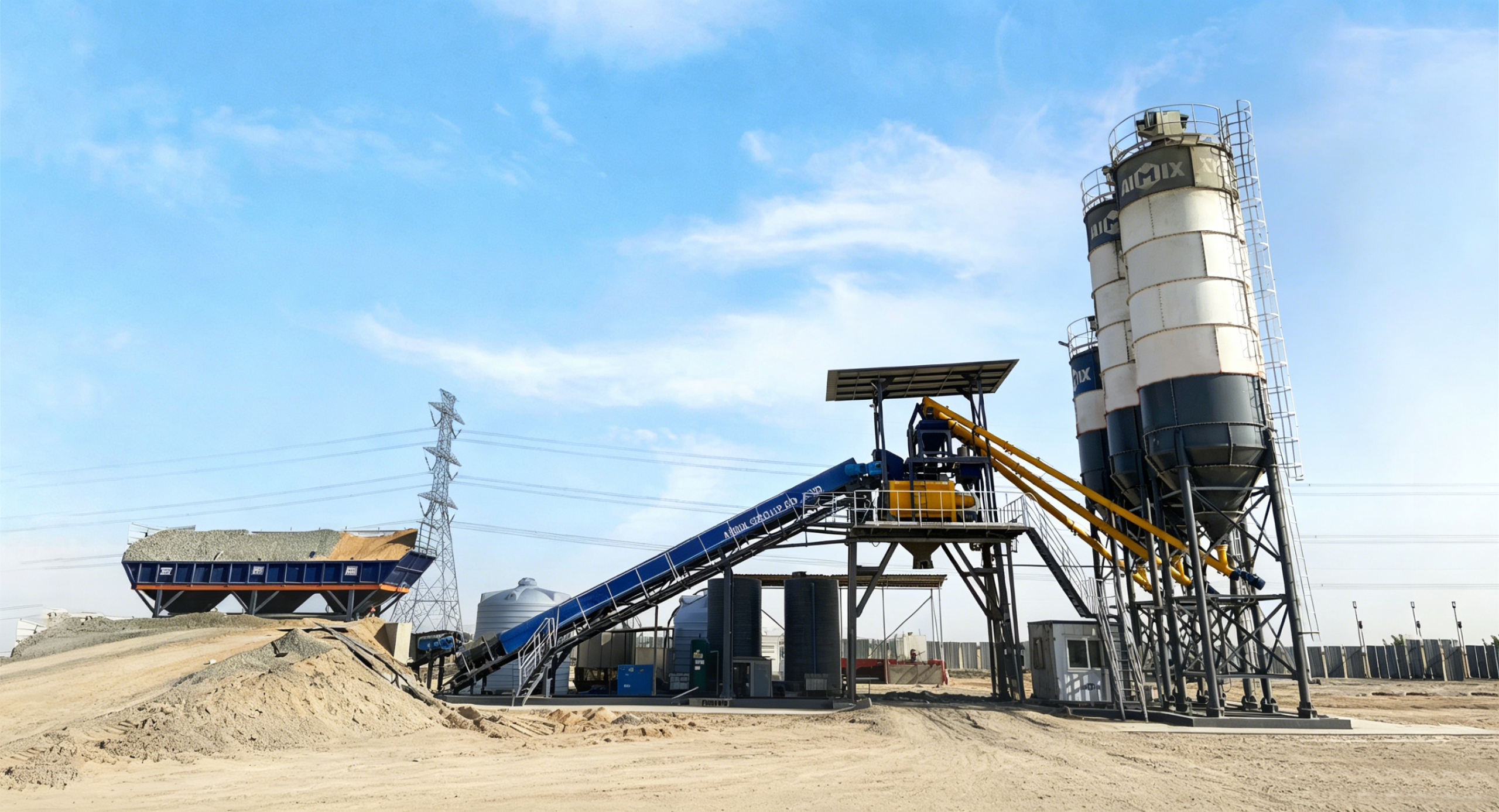
A stationary concrete plant is generally appropriate when production demand is substantial, the project has a relatively stable location, and the equipment is expected to operate for an extended period. It can support large residential developments, industrial construction, precast operations, and infrastructure projects requiring a consistent concrete supply. Its principal advantage is the ability to establish a dedicated production area with organized aggregate stockpiles, cement storage, material handling, and batching controls. Once installed and commissioned, the facility can support repetitive production with a defined workflow. The trade-off is the initial site preparation and the effort required for relocation. Contractors should evaluate foundation or support requirements, installation time, transport arrangements, and the availability of space for storage and truck circulation before committing to this configuration.
When a Mobile Concrete Plant Offers Greater Flexibility
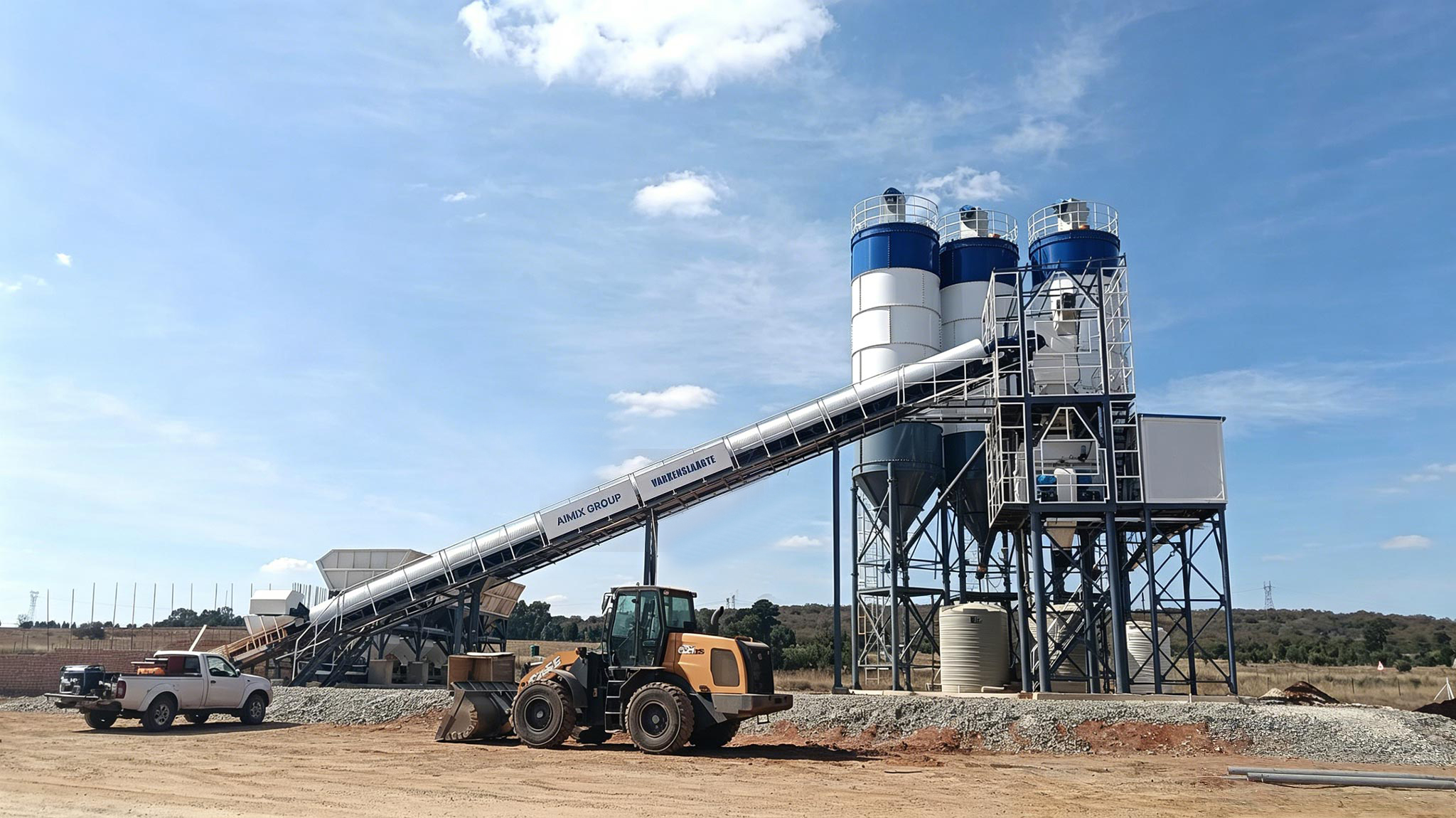
A mobile concrete plant can be advantageous when work progresses across different locations or when the production facility must be moved as construction advances. Road projects, utility networks, remote developments, and temporary infrastructure sites may benefit from a modular configuration that simplifies transportation and reassembly. However, mobility does not eliminate logistical requirements. Contractors still need suitable ground conditions, access for aggregate delivery, cement storage, water supply, electrical or generator capacity, and sufficient room for concrete trucks. The appropriate choice depends on the project’s production profile. A mobile configuration may reduce relocation disruption, while a stationary installation may suit sustained output at a fixed location. Neither option is automatically superior for every desert project.
Plan for Saudi Arabia’s Desert Operating Conditions
Control Aggregate Temperature, Moisture, and Concrete Consistency
High temperatures can accelerate slump loss and influence setting behavior, making material management a critical part of desert concrete production. Aggregates exposed to direct sunlight may become considerably warmer than shaded materials, while changing moisture levels can affect the accuracy of water dosing. Contractors should provide appropriate aggregate stockpile management, monitor moisture content, and calibrate weighing and water-metering systems. Depending on the concrete specification and weather conditions, additional measures may include shaded storage, chilled mixing water, approved admixtures, and adjusted production schedules. Quality control must follow the project’s approved mix designs and applicable Saudi requirements. A plant with accurate batching systems helps maintain proportioning consistency, but suitable materials and disciplined operating procedures remain essential.
Protect Equipment Against Dust, Heat, and Abrasive Wear
Windblown sand and airborne dust can affect filters, electrical enclosures, sensors, pneumatic components, and moving mechanisms. High ambient temperatures can also increase the thermal load on motors, compressors, control systems, and hydraulic equipment. Before purchasing, contractors should check the manufacturer’s provisions for dust protection, ventilation, enclosure ratings, filter maintenance, and the specified operating-temperature range. Cement silo filters and dust-collection arrangements deserve particular attention because they influence both environmental control and reliable material handling. Wear parts also require consideration. Aggregate abrasion can affect conveyor belts, mixer liners, blades, and transfer points. An accessible maintenance layout and a practical spare-parts inventory can reduce the likelihood of prolonged downtime in remote locations.
Calculate the Investment and Operating Costs
Understand the Cost of a Concrete Plant in Saudi Arabia
The cost of concrete batching plant in Saudi Arabia depends on several interconnected variables, including rated capacity, mixer configuration, aggregate batching system, cement silos, automation level, environmental controls, and installation requirements. The total investment may also include freight, import-related charges, inland transportation, site preparation, electrical connections, water infrastructure, commissioning, and operator training. Optional equipment such as additional silos, ice or chilled-water systems, and enhanced dust-control measures can further affect the budget. Contractors should therefore prepare a complete installed-cost estimate rather than comparing machinery prices alone. Two plants with similar nominal capacities may require substantially different supporting infrastructure and operating expenditure.
Evaluate the Price Beyond the Initial Quotation
The price of concrete batching plant in Saudi Arabia should be evaluated alongside production reliability, energy consumption, maintenance requirements, spare-parts availability, and the expected operating period. A lower initial quotation may not represent the lower overall cost if the configuration requires frequent maintenance or cannot meet peak demand. Conversely, purchasing more capacity than the project can utilize may leave a substantial portion of the investment idle. A useful comparison includes the equipment supply scope, installation responsibilities, warranty terms, expected consumption of key resources, and the availability of technical support. Contractors should request itemized quotations that clearly identify included components and excluded expenses.
Prepare Utilities, Logistics, Installation, and Maintenance
Secure Water, Power, Aggregate Storage, and Site Access
Reliable concrete production depends on more than the batching machinery. Contractors must verify the availability and quality of mixing water, the stability of the power supply, aggregate delivery routes, cement replenishment arrangements, and space for finished-concrete dispatch. Remote projects may require water storage tanks, generators, additional fuel arrangements, or dedicated material-handling equipment. These requirements should be incorporated into the initial site layout rather than addressed after installation. Truck circulation is another important consideration. Poorly arranged entry and exit routes can cause congestion, disrupt batching cycles, and reduce actual plant output even when the machinery has sufficient rated capacity.
Plan Commissioning, Spare Parts, and Technical Support
Installation planning should include transport access, assembly requirements, calibration, safety checks, trial batching, and operator training. Before production begins, the team should verify weighing accuracy, interlocks, emergency stops, mixer performance, and the operation of dust-control systems. For desert sites located far from major service centers, contractors should identify critical spare parts and establish a preventive maintenance schedule. Routine inspection of filters, belts, bearings, mixer wear components, and electrical connections can help prevent avoidable stoppages. Concrete batching plant supplier support should be evaluated in practical terms: response arrangements, remote troubleshooting capability, spare-parts lead times, and the availability of qualified technicians.
Assess Investment Returns Before Making a Purchase
Compare On-Site Production with Outsourced Concrete Supply
An investment assessment should compare the full cost of operating an on-site batching plant with the cost and reliability of purchasing concrete from external suppliers. The comparison should include raw materials, labor, electricity or fuel, water, maintenance, depreciation, transportation, and any applicable financing costs. Contractors should also account for the value of improved scheduling control and reduced exposure to delivery interruptions. These benefits are especially relevant when a remote site has limited alternative supply options. However, their financial value should be based on project-specific estimates rather than assumed savings.
Match the Investment to Project Duration and Future Use
The investment of concrete batch plant should be aligned with the duration of the contract, expected production utilization, and opportunities to reuse the equipment. A plant used across several projects may spread its capital cost over a larger volume of concrete than one purchased for a short, isolated contract. Before making a decision, contractors should test different utilization scenarios, including production delays, seasonal demand changes, and the possibility of relocating the plant. The resulting assessment provides a clearer picture of payback time and investment risk.
Conclusion
Investing in a concrete batching plant for desert construction in Saudi Arabia requires coordinated planning across equipment selection, material management, site infrastructure, maintenance, and financial evaluation. Contractors should begin with realistic concrete demand estimates, then select a stationary or mobile configuration that matches the project’s location and duration. Desert operating conditions make temperature control, dust protection, and dependable maintenance particularly important. At the same time, the purchase decision should account for the complete installed cost rather than the equipment quotation alone. By evaluating production requirements and lifecycle expenditure together, contractors can select a batching solution that supports reliable concrete supply throughout the project and remains practical for future construction work.