A load test is a critical procedure performed to verify the structural integrity, operational safety, and lifting performance of a 50-ton overhead crane before it enters regular service. In industries such as steel manufacturing, precast concrete production, shipbuilding, heavy fabrication, and power plant construction, overhead cranes routinely handle extremely heavy loads under demanding duty cycles. Any failure caused by improper installation, mechanical defects, or structural weakness can result in costly downtime, equipment damage, or serious safety incidents.
Proper load testing ensures the crane can safely perform under rated working conditions while complying with applicable engineering standards and safety regulations. This article explains the complete process of conducting a load test for a 50 ton overhead crane, including preparation, testing procedures, inspection points, safety measures, and documentation requirements.
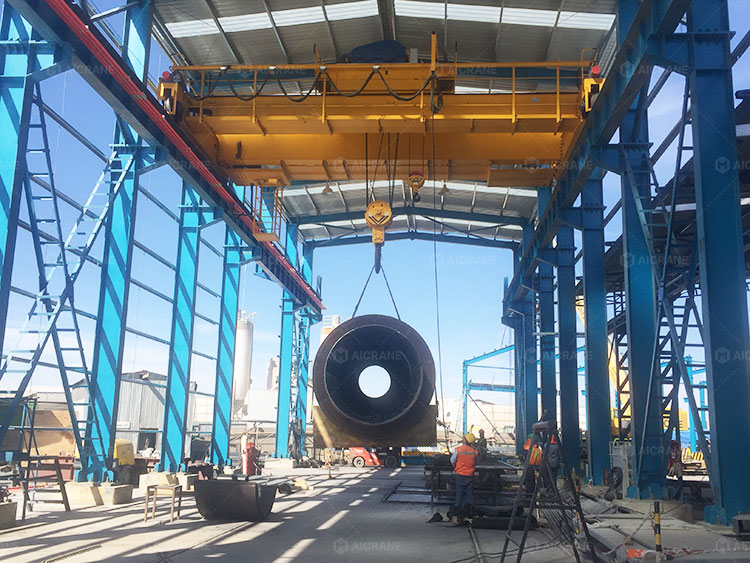
Why Load Testing Is Important for a 50-Ton Overhead Crane
A 50-ton overhead crane operates under high stress conditions, especially in heavy-duty industrial environments. Load testing confirms that the crane has been manufactured, installed, and commissioned correctly before being released for production use.
The primary purposes of load testing include:
- Verifying the crane can safely lift its rated capacity
- Confirming structural stability and strength
- Checking hoist, trolley, and bridge travel performance
- Ensuring braking systems function properly
- Testing overload protection and safety devices
- Detecting installation defects or abnormal conditions
- Evaluating deflection and alignment under load
Load testing is typically required in the following situations:
- After new crane installation
- Following major crane repairs or modifications
- After replacing critical load-bearing components
- During commissioning and project acceptance
- As part of periodic inspection programs
For heavy duty overhead cranes, load testing is not simply a formality — it is a key part of risk prevention and operational reliability.
Types of Load Tests for a 50-Ton Overhead Crane
A complete load testing process generally includes two stages: no-load testing and load testing.
No-Load Test
Before applying any test weight, the crane is operated without a load to verify that all motions and systems function correctly.
During the no-load test, inspectors evaluate:
- Hoisting operation
- Trolley cross travel
- Bridge long travel
- Brake response
- Limit switch functionality
- Emergency stop systems
- Electrical controls
- Remote control responsiveness
- Noise and vibration levels
The crane should move smoothly in all directions without abnormal sounds, excessive vibration, or electrical faults.
Any issue identified during the no-load test must be corrected before proceeding to the load test.
Static Load Test
The static load test verifies the structural strength and load-bearing capability of the crane.
For most industrial standards, the static test load is 125% of the crane’s rated capacity.
For a 50 ton double girder overhead crane:
- Rated capacity: 50 tons
- Static test load: 62.5 tons
The objective is to confirm that the crane structure can safely withstand overload conditions without permanent deformation or structural damage.
Dynamic Load Test
The dynamic load test evaluates the crane’s operational performance while moving under load.
The dynamic test is typically conducted at 110% of rated capacity.
For a 50-ton overhead crane:
- Dynamic test load: 55 tons
This test focuses on the performance of mechanical and electrical systems during lifting and traveling operations.
Preparation Before Conducting the Load Test
Thorough preparation is essential to ensure safe and accurate testing.
Verify Installation Quality
Before testing begins, inspectors should confirm that the crane installation has been completed correctly.
Inspection items include:
- Rail alignment
- Bolt tightening
- Structural assembly accuracy
- Electrical wiring connections
- Grounding systems
- Lubrication condition
- Buffer installation
- Safety guard installation
Improper installation can lead to inaccurate testing results or unsafe operating conditions.
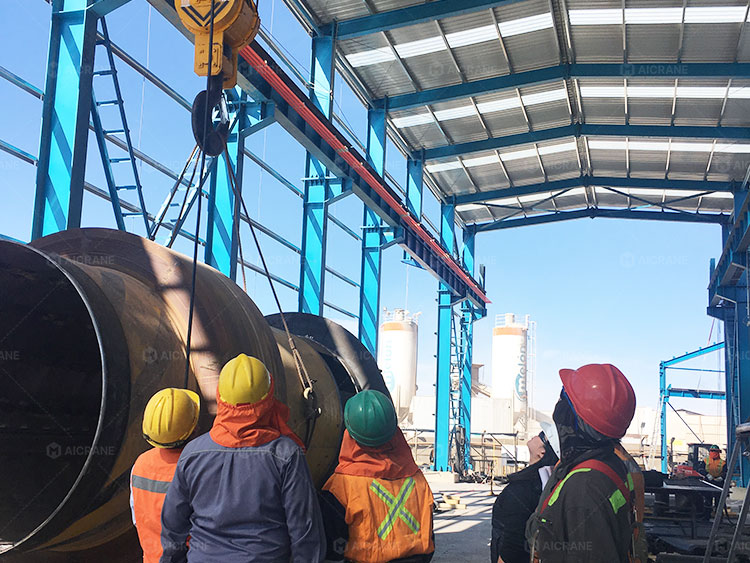
Inspect Critical Crane Components
All major overhead bridge crane components should be carefully inspected before load testing.
Hoisting Mechanism
Inspect the following:
- Wire ropes
- Rope drum condition
- Hook assembly
- Pulley alignment
- Gearbox lubrication
- Brake operation
Wire ropes should show no signs of twisting, crushing, or excessive wear.
Structural Components
Inspect:
- Main girders
- End beams
- Welded joints
- Bolted connections
- Support structures
Look for:
- Cracks
- Misalignment
- Corrosion
- Deformation
- Poor weld quality
Electrical Systems
Verify proper operation of:
- Motors
- Control panels
- Limit switches
- Emergency stop circuits
- Power supply systems
- Overload protection devices
Electrical faults discovered during testing can lead to dangerous operating conditions.
Prepare Test Weights
The test load must be accurate and securely rigged.
Common test weight options include:
- Concrete blocks
- Steel plates
- Water bags
- Certified load blocks
All weights should be verified to ensure testing accuracy.
Improperly secured test loads can create serious safety hazards during lifting operations.
Establish a Safe Testing Area
The load testing zone should be isolated from normal production activities.
Important safety measures include:
- Barricading the testing area
- Posting warning signs
- Restricting unauthorized access
- Assigning a testing supervisor
- Establishing communication procedures
Only authorized personnel should remain inside the testing area during the procedure.
Static Load Test Procedure
The static load test evaluates the crane’s ability to safely support overload conditions.
Step 1: Apply 125% Test Load
The crane slowly lifts the 62.5-ton test load slightly above the ground, typically between 100 mm and 200 mm.
The load should be raised gradually to avoid impact loading.
Inspectors monitor:
- Structural behavior
- Wire rope condition
- Hook performance
- Brake holding capability
Step 2: Hold the Load Suspended
The crane maintains the suspended load for a specified period, usually between 10 and 30 minutes.
During this holding period, inspectors observe:
- Girder deflection
- Structural stability
- Brake slippage
- Unusual noises
- Weld performance
The crane must hold the load steadily without drifting or abnormal movement.
Step 3: Measure Girder Deflection
Deflection measurements are taken at critical points along the main girder.
The measured deflection is compared with allowable engineering standards.
Excessive deflection may indicate:
- Insufficient structural rigidity
- Fabrication defects
- Material weakness
- Improper installation
Permanent deformation after unloading is unacceptable.
Step 4: Lower the Load and Reinspect
After the holding period is completed, the load is lowered slowly and safely.
Inspectors then perform another detailed structural inspection to identify:
- Residual deformation
- Cracks
- Loose connections
- Component damage
If any abnormal condition is detected, corrective actions must be completed before dynamic testing begins.
Dynamic Load Test Procedure
The dynamic load test verifies crane performance during actual operational movement.
Step 1: Apply 110% Rated Load
The crane lifts a 55-ton test load for operational testing.
Unlike the static test, the dynamic test focuses on motion performance rather than overload endurance.
Step 2: Perform Hoisting Operations
The crane repeatedly performs lifting and lowering operations under load.
Inspectors evaluate:
- Hoist smoothness
- Brake reliability
- Motor temperature
- Vibration levels
- Acceleration and deceleration behavior
The hoist mechanism should operate smoothly without slipping or overheating.
Step 3: Test Trolley Cross Travel
The trolley moves across the bridge while carrying the suspended load.
Inspectors observe:
- Wheel alignment
- Rail contact
- Travel smoothness
- Abnormal noise
- Trolley stability
There should be no skewing or excessive vibration.
Step 4: Test Bridge Long Travel
The crane bridge travels along the runway with the suspended load.
Inspectors verify:
- Smooth acceleration
- Stable travel motion
- Proper braking distance
- Motor synchronization
- Power supply performance
Bridge travel should remain stable throughout the test.
Step 5: Verify Safety Devices
All crane safety devices must be tested during the dynamic load test.
These include:
- Emergency stop systems
- Upper and lower limit switches
- Overload protection devices
- Audible alarms
- Anti-collision systems
Safety systems must respond immediately and function reliably under operating conditions.
Key Safety Precautions During Load Testing
Because of the high loads involved, strict safety management is essential during testing.
Use Qualified Personnel
Load testing should only be performed by trained professionals, including:
- Crane operators
- Installation engineers
- Safety inspectors
- Electrical technicians
Experienced personnel help reduce operational risks and improve testing accuracy.
Avoid Sudden Crane Movements
Abrupt lifting, stopping, or directional changes can generate dangerous dynamic forces.
All crane motions should remain controlled and gradual during testing.
Monitor Environmental Conditions
For cranes operating outdoors or in open industrial environments:
- Avoid testing during strong winds
- Stop testing during heavy rain
- Ensure adequate visibility
Poor weather conditions can affect crane stability and operator safety.
Maintain Clear Communication
Continuous communication is essential during all testing stages.
Communication methods may include:
- Radios
- Hand signals
- Designated supervisors
All personnel should understand emergency procedures before testing begins.
Common Problems Identified During Load Testing
Load testing often reveals installation or mechanical issues that require correction.
Excessive Structural Deflection
Possible causes include:
- Weak structural design
- Fabrication defects
- Material quality problems
Brake Slippage
Possible causes include:
- Improper adjustment
- Worn brake linings
- Hydraulic malfunctions
Abnormal Vibration or Noise
Potential causes include:
- Rail misalignment
- Wheel installation errors
- Bearing damage
Electrical System Faults
Possible causes include:
- Loose wiring connections
- Motor overload
- Faulty control systems
Early identification of these issues helps prevent future operational failures.
Documentation and Final Inspection
After successful testing, detailed records should be prepared for project documentation and future reference.
A complete load test report typically includes:
- Crane specifications
- Test date and location
- Test load values
- Deflection measurements
- Operational observations
- Safety device verification
- Inspector signatures
- Final approval results
These records are important for regulatory compliance, maintenance planning, and customer acceptance.
Best Practices for Successful Overhead Crane Load Testing
To ensure reliable and safe testing results:
- Use calibrated test weights
- Follow recognized testing standards
- Conduct thorough pre-test inspections
- Perform both static and dynamic tests
- Keep accurate documentation
- Use experienced testing personnel
- Stop testing immediately if abnormalities occur
Professional testing procedures help improve crane reliability and reduce long-term operational risks.
Conclusion
Conducting a load test for a 50-ton overhead crane is an essential process that verifies structural integrity, operational safety, and lifting performance before the crane enters service. From no-load inspection to static and dynamic testing, every step helps ensure the crane can safely handle demanding industrial lifting applications.
Proper load testing reduces the risk of accidents, protects equipment, minimizes downtime, and improves long-term crane reliability. For industries such as steel manufacturing, precast concrete production, shipbuilding, and heavy fabrication, a professionally executed load test is a critical part of safe and efficient crane operation.
By following proper testing procedures, using qualified personnel, and adhering to recognized engineering standards, companies can ensure their 50-ton overhead cranes operate safely and reliably throughout their service life.