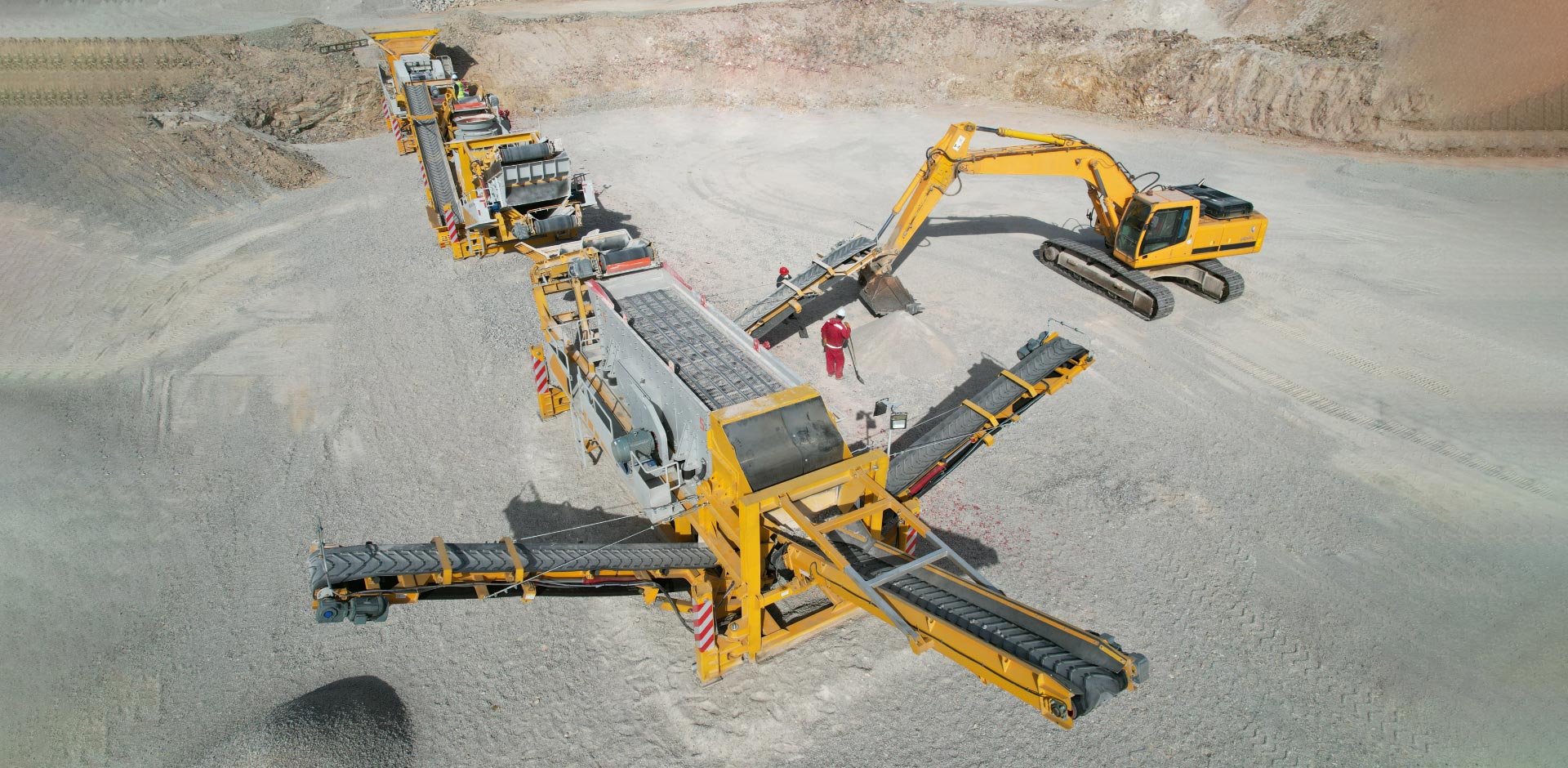
Dust management is a major operational challenge for a stone crusher Chile project, particularly in regions where strong winds and prolonged dry periods are common. From the arid Atacama Desert to the central mining regions, weather conditions can turn ordinary crushing and screening activities into significant sources of airborne dust. Wind spreads fine particles beyond equipment boundaries, while low humidity allows dust to remain suspended for longer periods. Understanding how these factors interact helps quarry operators select suitable crushing equipment, improve dust suppression, and maintain more stable production.
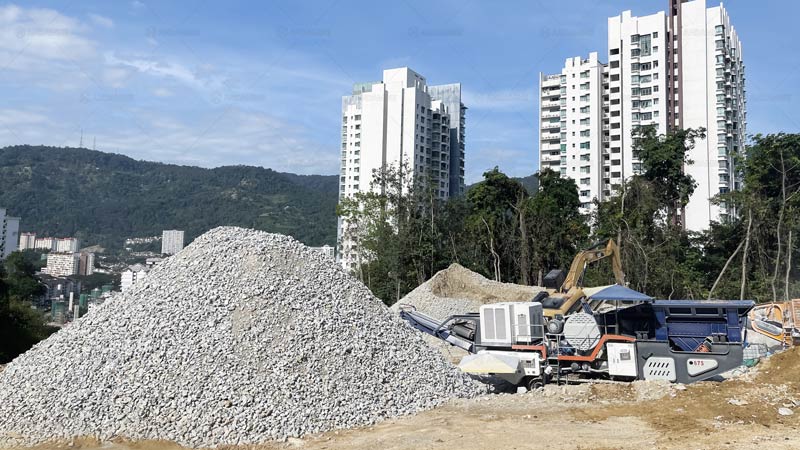
Why Wind and Dry Weather Increase Dust at Chilean Quarries
Chile’s diverse geography creates different dust management challenges. Northern mining areas experience extremely low rainfall, while central regions can face seasonal droughts and strong afternoon winds. These conditions influence how dust is generated, transported, and deposited around a quarry.
Strong Winds Spread Dust Beyond Crushing Areas
Wind changes the direction and distance that airborne particles travel. When wind passes through crushing and screening areas, it can carry fine material from conveyor transfer points, stockpiles, and discharge outlets toward nearby roads, workers, and surrounding communities. A dust control system designed only around individual machines may therefore fail to control emissions across the entire production site.
For a stone crusher Chile(chancadora de piedra Chile) operation, wind direction and seasonal speed should be considered when positioning equipment. Operators should also identify downwind areas where additional barriers, water sprays, or monitoring points may be necessary.
Low Humidity Makes Fine Particles Easier to Disperse
In dry climates, fine mineral particles lose surface moisture quickly. Without sufficient moisture, particles are more easily released when rocks collide, fall onto conveyor belts, or are transferred between processing stages. Stockpiles and unpaved haul roads become additional sources of airborne dust.
This means that water consumption and spray coverage must be adjusted according to actual operating conditions rather than relying on a fixed daily schedule.
Where Dust Is Generated in a Stone Crushing Plant
Effective dust management requires identifying the main emission points throughout the production process. Different crushing stages create different particle sizes and dust concentrations.
| Production Area | Main Dust Source | Recommended Control |
|---|---|---|
| Primary crushing | Rock feeding and jaw crushing | Enclosed feeding points and water sprays |
| Secondary crushing | Repeated rock impacts and material discharge | Local dust extraction and spray systems |
| Fine crushing | Generation of small mineral particles | Enclosed equipment and dust collectors |
| Screening | Vibration and separation of dry aggregates | Covered screens and controlled spraying |
| Conveying | Material falling at transfer points | Covered conveyors and transfer chutes |
| Stockpiling | Wind erosion and material handling | Wind barriers and stockpile moisture control |
For example, a mineral crusher(trituradora de minerales) processing dry copper-bearing rock may generate considerable fine dust during multiple crushing and screening stages. Controlling only the primary crusher will not address emissions from downstream equipment or material transportation.
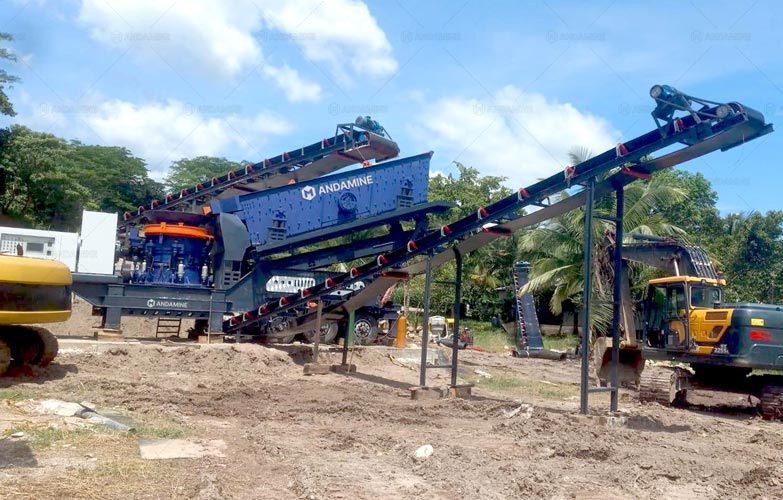
Choosing Crushing Equipment for Windy and Dry Conditions
Equipment configuration influences both dust generation and the difficulty of controlling emissions. Chilean quarry operators should consider material characteristics, production capacity, site layout, and local weather when selecting a crushing solution.
Portable Stone Crusher for Flexible Dust Management
A portable stone crusher(trituradora de piedra portátil) integrates several processing units on a transportable chassis, reducing the need for extensive material transfer between separately installed machines. Its compact layout can help operators establish more centralized dust control zones.
For remote quarries in northern Chile, a portable stone crusher also offers flexibility when production areas change. However, mobility does not automatically eliminate dust. Operators should check whether the equipment supports enclosed transfer points, spray nozzles, and compatible dust collection systems.
Cone Crusher for Secondary and Fine Crushing
A cone crusher is commonly used for secondary or tertiary crushing when consistent aggregate sizes and higher processing efficiency are required. Its enclosed crushing chamber can help limit the direct release of dust compared with exposed material handling points, although additional suppression or extraction may still be necessary.
When incorporating a cone crusher into a stone crusher Chile configuration, operators should pay particular attention to feed openings, discharge chutes, vibrating screens, and conveyor connections. These interfaces often require more dust protection than the crusher body itself.
Match Dust Control to the Mineral Processing Stages
A mineral crusher system should be configured according to the characteristics of the material being processed. Hard, dry rocks may generate more fine particles during repeated crushing, while softer or naturally dusty materials can require additional precautions during feeding and conveying.
Rather than installing identical spray equipment everywhere, operators should prioritize high-emission locations and select suitable combinations of water suppression, enclosure, and dust extraction.
Practical Dust Control Strategies for Chilean Quarries
Wind and dry weather require a combination of engineering controls and daily operating adjustments. The following measures can improve dust management without unnecessarily increasing water and maintenance costs.
Adjust Water Spraying to Weather Conditions
Install adjustable spray nozzles at feeding points, crushers, screens, and conveyor transfer locations. During particularly dry and windy periods, operators can increase spray frequency or adjust droplet size to improve particle capture. Excessive water should be avoided because it may cause material blockage, sticky screens, and additional handling difficulties.
Install Wind Barriers and Enclosures
Windbreak fences can reduce wind speed around stockpiles and exposed processing areas. Enclosing conveyor transfer points and covering storage areas also limits the direct exposure of dry aggregates to wind. Equipment placement should consider prevailing wind directions and the location of sensitive surrounding areas.
Control Dust on Internal Haul Roads
Truck movement frequently generates dust that can spread throughout the quarry. Regular road watering, appropriate vehicle speeds, designated transport routes, and suitable road maintenance help reduce this secondary source of emissions.
Monitor Weather and Equipment Performance
Operators should record wind speed, humidity, visible dust conditions, and spray system performance. Establishing weather-based operating procedures makes it easier to respond to sudden changes. During extreme conditions, reducing material drop heights or temporarily adjusting production can also help prevent excessive dust dispersion.
What to Consider When Planning a Dust Control System
For a new stone crusher Chile project, dust control should be included in the initial equipment planning rather than added after production begins. Before selecting a solution, quarry operators should evaluate:
- Local climate: Seasonal rainfall, prevailing wind direction, humidity, and periods of extreme dryness.
- Material properties: Rock hardness, moisture content, particle size distribution, and fine material percentage.
- Production capacity: Processing volume, crushing stages, and the number of transfer points.
- Water availability: Local water resources, storage capacity, recycling options, and operating costs.
- Environmental requirements: Applicable Chilean air quality regulations, site permits, and monitoring obligations.
A well-designed crushing solution combines suitable equipment with site-specific dust suppression measures. Whether a quarry uses a portable stone crusher, a cone crusher(chancadora cónica), or a complete mineral crusher production line, the objective is to control dust at its source while maintaining reliable aggregate production. By considering wind patterns and dry-weather conditions from the beginning, Chilean quarry operators can improve working conditions, reduce material losses, and build more sustainable crushing operations.