When planning a container handling project, one of the first questions buyers ask is: “How much does an RTG crane cost?” However, experienced port operators, logistics companies, and industrial yard managers understand that the real issue is not just the final number on the quotation sheet. The more important question is: What is actually included in the RTG crane price quote?
A Rubber Tyred Gantry (RTG) crane is a highly customized heavy-duty lifting system used in container terminals, rail freight yards, logistics parks, and industrial material handling operations. Because each project has different operational requirements, RTG crane quotations can vary significantly between suppliers.
Some quotes may appear lower at first glance but exclude critical systems, installation support, transportation, commissioning, or automation functions. Others may include advanced features that improve long-term operational efficiency and reduce lifecycle costs.
Understanding every component inside an RTG crane price quotation helps buyers compare suppliers more accurately and avoid unexpected expenses later in the project.
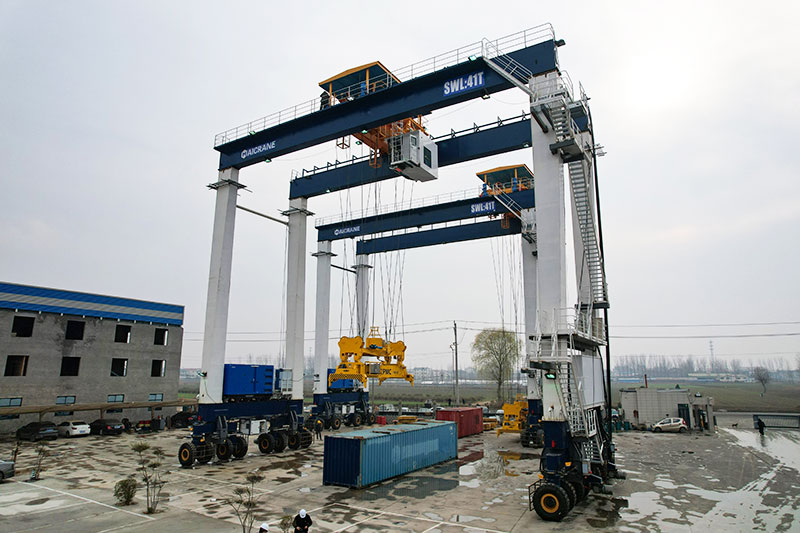
Main Structural Components Included in the RTG Crane Price
The structural system is one of the largest cost portions in any RTG crane quotation. It forms the core load-bearing framework of the crane and directly influences safety, rigidity, durability, and long-term performance.
A standard RTG crane structural package usually includes:
- Main gantry structure
- Main girder
- Supporting legs
- End beams
- Trolley frame
- Maintenance platform
- Access ladders and walkways
- Operator cabin (if applicable)
The structural steel grade, welding standards, and fabrication process significantly affect the final price.
For example:
- Higher-strength steel materials increase durability but raise manufacturing costs
- European FEM standards generally require stricter deflection control
- Coastal projects may require anti-corrosion painting systems
- High-wind environments may require reinforced structural designs
The span, lifting height, stacking configuration, and wheelbase dimensions also directly influence the total steel consumption and manufacturing complexity.
Hoisting Mechanism and Lifting System
The lifting mechanism is another major section included in an RTG crane price quote.
This typically includes:
- Hoisting motor
- Gearbox
- Drum assembly
- Wire ropes
- Pulley block system
- Brake system
- Spreader or lifting attachment
- Trolley traveling mechanism
The lifting capacity of the crane heavily impacts the specification and price of these components.
For container handling RTGs, the quotation may also include:
- Telescopic container spreader
- Twin-lift spreader
- Rotating spreader
- Anti-sway control system
Higher duty classifications and continuous multi-shift operations require more robust hoisting systems with improved thermal resistance and longer service life.
In modern automated terminals, smart hoisting control systems may also be included to improve positioning accuracy and operational efficiency.
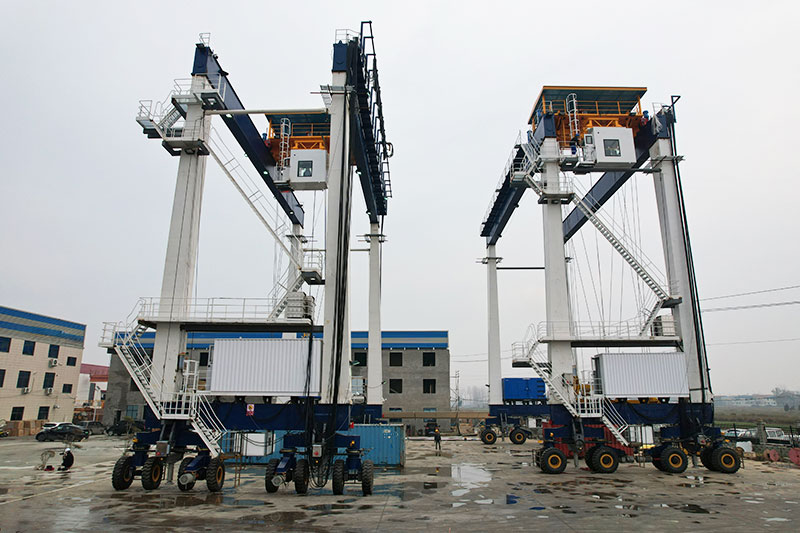
Traveling System and Tire Configuration
Unlike rail mounted gantry cranes, RTG cranes rely on rubber tires and steering systems for mobility. Therefore, the traveling mechanism is an important part of the quotation.
A complete traveling system may include:
- Traveling motors
- Reducers
- Wheel assemblies
- Axles
- Hydraulic steering system
- Tire assemblies
- Electrical cable systems
- Encoder systems for positioning
The steering mode of the RTG crane can significantly affect pricing.
Common steering configurations include:
- Straight travel
- 90-degree pivot steering
- Carousel steering
- Ackermann steering
More advanced steering systems improve yard flexibility but increase system complexity and cost.
The number and quality of tires also influence the quotation. Heavy-duty RTG cranes operating in large container terminals often require high-performance industrial tires designed for continuous operation and reduced wear.
Electrical System Included in RTG Crane Pricing
The electrical system is another major portion of the crane quotation.
A standard electrical package typically includes:
- Main electrical cabinet
- PLC control system
- Frequency inverters
- Power distribution system
- Control panels
- Safety limit switches
- Emergency stop systems
- Lighting system
- Cable reels
- Sensors and encoders
Modern RTG cranes increasingly use variable frequency drive (VFD) technology for smoother acceleration, reduced energy consumption, and minimized mechanical shock.
The complexity of the electrical system depends heavily on the level of automation required.
Basic RTGs may only include manual operation functions, while advanced automated RTGs may include:
- Remote operation systems
- GPS positioning
- OCR container recognition
- Automatic path correction
- Intelligent anti-collision systems
- Real-time diagnostic monitoring
- Fleet management integration
These smart features increase the initial equipment price but can improve long-term productivity and reduce labor costs.
Power Supply Configuration
The power supply system also plays a major role in RTG crane pricing.
Different power configurations include:
- Diesel-powered RTGs
- Hybrid RTGs
- Fully electric RTGs
- Cable reel powered systems
- Busbar powered systems
- Battery-powered RTGs
Diesel RTGs generally have lower initial infrastructure requirements but higher fuel consumption and maintenance costs.
Hybrid and electric RTGs usually have higher upfront prices due to:
- Energy recovery systems
- Battery systems
- Electrification equipment
- Cable management systems
However, they often provide significant energy savings and lower emissions during long-term operation.
Many ports are now prioritizing electric RTGs to support environmental and carbon reduction goals.
Safety Features Included in the Quotation
Safety systems are critical for heavy-duty lifting equipment and are often included in RTG crane quotations.
These may include:
- Overload protection
- Wind speed monitoring system
- Emergency braking system
- Anti-collision devices
- Laser scanning systems
- Obstacle detection sensors
- Fire protection systems
- CCTV monitoring systems
- Audible and visual alarms
Advanced safety systems are especially important in automated container yards where multiple cranes operate simultaneously.
In high-wind coastal environments, additional safety measures such as storm locking systems and rail clamps may also be included.
Automation and Smart Monitoring Functions
Modern RTG crane projects increasingly include automation-related technologies.
Depending on project requirements, the quotation may include:
- Semi-automatic operation
- Fully automatic stacking functions
- Remote control stations
- Smart positioning systems
- AI-assisted path planning
- Predictive maintenance systems
- Cloud-based diagnostic platforms
- Real-time operational monitoring
These intelligent systems help reduce downtime and improve operational efficiency.
Predictive maintenance systems are becoming especially valuable because they can monitor:
- Motor temperature
- Gearbox vibration
- Brake wear
- Tire condition
- Structural stress
- Electrical faults
This allows operators to detect issues before failures occur.
Transportation and Shipping Costs
One common mistake buyers make is assuming transportation is automatically included in the RTG crane quotation.
In reality, some suppliers provide:
- EXW pricing
- FOB pricing
- CIF pricing
- DDP pricing
The included logistics scope can vary greatly.
Transportation-related costs may include:
- Inland transportation
- Port handling
- Ocean freight
- Customs clearance
- Oversized cargo transportation
- Packaging and protection
Because RTG cranes are large structures, transportation planning is often complex and can become a major project expense.
Modular designs are sometimes used to reduce transportation difficulty and shipping costs.
Installation and Commissioning Services
Installation support is another critical quotation item.
Some RTG crane suppliers only provide equipment, while others include:
- Installation guidance
- On-site supervision
- Commissioning services
- Load testing
- Operator training
- Maintenance training
The level of installation support directly affects project implementation efficiency.
For overseas projects, online installation guidance has become increasingly common. However, some customers still require on-site engineers for complex projects or automated systems.
Commissioning and testing services are particularly important to ensure:
- Proper crane alignment
- Electrical system calibration
- Safety verification
- Operational stability
- Compliance with project specifications
Spare Parts and After-Sales Service
Many professional RTG crane quotations also include spare parts packages and after-sales support.
This may include:
- Recommended spare parts lists
- Initial spare parts kits
- Long-term maintenance support
- Warranty coverage
- Remote technical assistance
- Emergency troubleshooting support
The warranty period can vary depending on the supplier and project requirements.
A lower equipment price may sometimes indicate limited after-sales support, which could lead to higher operational risks later.
Engineering Design and Customization Costs
Because RTG cranes are highly customized systems, engineering design work is often included in the quotation.
Customization may involve:
- Non-standard span dimensions
- Special lifting heights
- High wind resistance design
- Extreme temperature adaptation
- Explosion-proof systems
- Special container handling configurations
- Multi-container lifting arrangements
Engineering analysis may include:
- Structural calculations
- Finite element analysis
- Wheel load calculations
- Electrical system design
- Foundation load evaluation
More customized projects generally require greater engineering involvement, which increases quotation complexity and overall price.
Final Thoughts
An RTG crane quotation is far more than a simple equipment price sheet. It represents a complete combination of structural engineering, electrical systems, automation technology, safety systems, transportation planning, installation support, and long-term service considerations.
When comparing RTG gantry crane suppliers, buyers should carefully review exactly what is included — and what is excluded — from the quotation.
A lower initial price does not always mean lower total project cost. In many cases, investing in higher-quality components, smarter automation systems, better energy efficiency, and stronger after-sales support can significantly improve long-term operational reliability and reduce lifecycle expenses.
The best RTG crane quotation is not simply the cheapest one. It is the quotation that delivers the best balance between performance, safety, efficiency, reliability, and long-term value for the specific operational requirements of the project.